
If you are buying several pieces of equipment within a few months, one combined finance facility can often be easier to manage than three separate loans. It also has trade-offs, and we will walk through both so you can decide with confidence.
For farmers and rural landholders around Bungendore, equipment rarely arrives one item at a time. A tractor needs a slasher, a slasher needs a trailer to cart what it clears, and suddenly you have a few purchases to fund at once. We are here to help you work out whether bundling suits your farm.
What Does Bundling Farm Equipment Finance Mean?
Bundling means financing two or more items under one agreement, with one lender, one repayment and one set of paperwork. Instead of arranging separate farm equipment loans for each purchase, the items are grouped into a single facility.
The items are usually the security for the loan, so the lender holds a claim over all of them until the debt is repaid. The repayment is set on the combined amount and the term you choose, and it can often be structured around your income pattern. Our farm machinery finance page explains the general options if you want a starting point.
When Bundling Farm Machinery Finance Makes Sense
Bundling tends to suit you when the purchases are linked, arrive close together and will all be useful for a similar length of time. If one item depends on another, such as a tractor and the implements it pulls, it makes sense to fund them together.
A few situations where it often works well:
- You are buying a main machine and its attachments from the same dealer, or in the same season.
- You want one repayment date to manage, rather than several scattered through the month.
- You are doing some farm capital expenditure planning and would like the whole spend laid out in one budget.
It works less well when one item is a short-term purchase and another is a long-term asset, because you may end up paying for the short-lived item well after it has worn out.
A Bundled Facility in Practice: Tractor, Slasher and Trailer
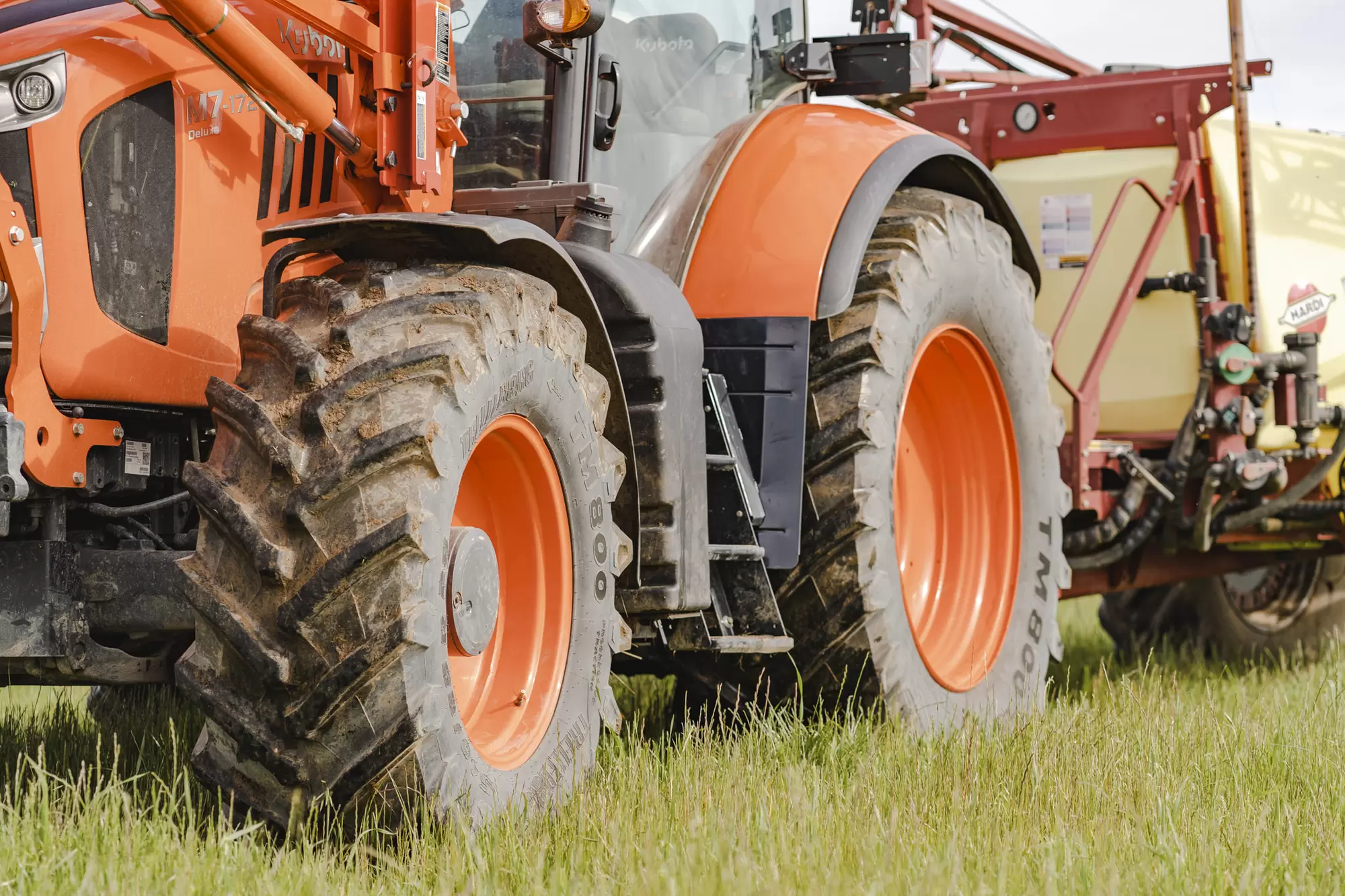
As an example, consider a Bungendore landholder who needs a tractor, a slasher and a tipping trailer. Suppose the three items come to $180,000 in total, made up of about $110,000 for the tractor, $30,000 for the slasher and $40,000 for the trailer.
Separate loans would mean three applications, three sets of fees and three repayment dates. Instead, our broker could compare farm equipment lenders and arrange one facility over five years. At an illustrative rate of 6.75% p.a., with no deposit and no balloon payment, the repayment on $180,000 over 60 months works out to roughly $3,543 a month. This is an example only. Your actual rate and repayment will depend on your lender, your deposit, your financial position and the age of the equipment.
The outcome is one monthly payment, one lender relationship and one review date. If the landholder later has extra cash from a good season, they can talk to the lender about what extra repayments or an early payout would look like, and any cost that applies. You can test your own numbers with a broker before you commit to anything.
The Trade-Offs of Bundling Equipment Purchases
The main cost of bundling is flexibility. Because one agreement covers every item, selling or trading in one piece of equipment can mean changing or paying out the whole facility, depending on the lender's terms.
There are two other things to weigh up:
- Term mismatch. A five-year term suits a trailer and a slasher differently than it suits a tractor. A tractor may hold its value for many years, while attachments can wear faster, so you could still be repaying an item that needs replacing.
- Shared security. If your repayments fall behind, the lender may have a claim over every item in the bundle, not just one.
Sometimes the sensible answer is to bundle only the items that belong together and finance the rest separately. We will tell you plainly if we think splitting it up suits you better.
Lease or Loan for a Bundled Purchase?
A loan generally leads to you owning the equipment, while a lease usually means paying to use it, with options at the end of the term that depend on the agreement. Both can cover several items in one facility.
Farm machinery leasing can suit you if you like to upgrade regularly. Farm tractor leasing, for example, can keep a newer machine in the shed, though you may not own it at the end and the total cost may be higher than a loan over the same period. A loan suits you if you want to keep the equipment long term. Our lease vs buy comparison walks through the differences, and our tractor finance page covers the most common starting point for many farms.
Tax treatment differs between loans and leases, and it depends on your circumstances, so speak with your accountant before choosing. If cash flow through a dry spell is your main worry, our cashflow solutions page covers other ways to keep things moving.
We like to get to know your farm first: what you run, how your income moves through the year and what you plan to buy next. Call one of our team or book an appointment at a time that works for you, and we will talk through whether a bundled facility, separate loans or a mix of both suits you.